Opinion by Robert Spurway, CEO & Managing Director at GrainCorp. This piece first appeared on 5 July 2026 in The Australian newspaper, here.
Australians have long treated fuel security and decarbonisation as separate strategic challenges. The global disruptions over the past few months have been a timely reminder that they are, increasingly, one and the same.
Heightened instability in the Strait of Hormuz and ongoing uncertainty around key global shipping routes have reinforced something many Australians understand; as an island nation, we remain heavily reliant on imported liquid fuels.
Despite efforts to bolster fuel reserves, we import close to 90 per cent of our liquid fuel requirements, leaving us exposed to geopolitical shocks well beyond our shores.
The question is no longer whether Australia needs a more resilient fuel supply, but how we build one.
At the same time, governments, airlines, businesses and consumers are seeking practical pathways to reduce emissions in hard-to-abate sectors such as aviation, positioning fuel security and decarbonisation as the same opportunity.
Renewable fuels, including sustainable aviation fuel (SAF), represent a rare opportunity to strengthen fuel security, build sovereign industrial capability, create regional jobs and support Australia’s economic resilience while reducing emissions.
Today, Australian agriculture produces many of the essential raw materials, or ‘feedstocks,’ used in renewable fuel production, including canola, tallow and used cooking oil. Yet most of these feedstocks are exported overseas, processed elsewhere, and can be returned to Australia as higher‑value fuel products.
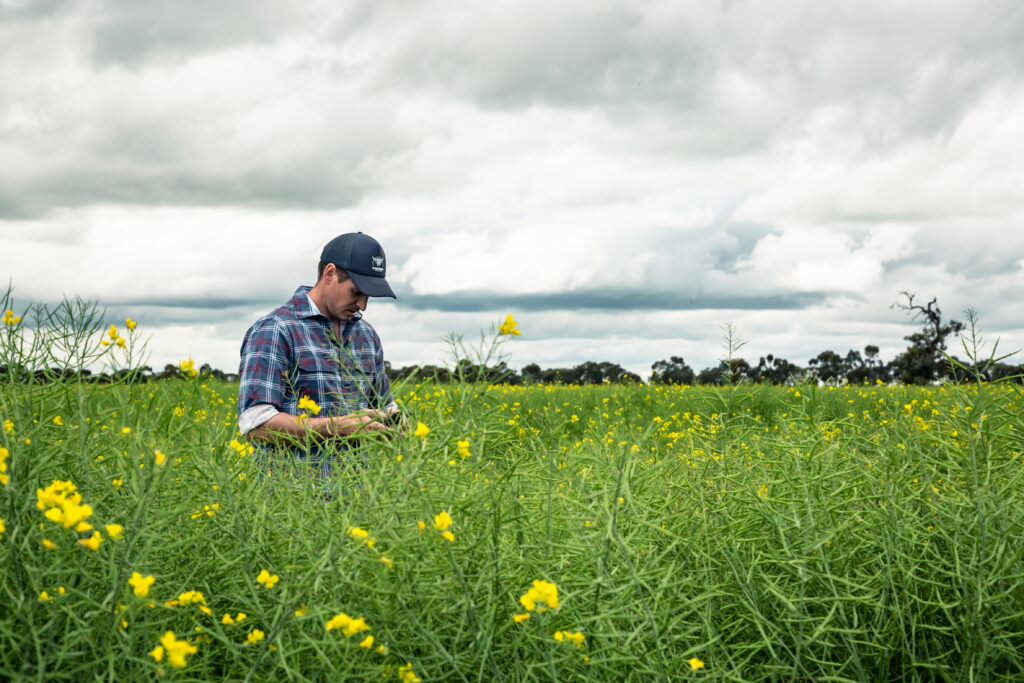
Canola alone tells the story. Now Australia’s second-largest export to Europe after coal, around 80 per cent of the crop is exported and used in renewable fuel production overseas – enough to produce roughly 1.6 billion litres annually.
In effect, we send the value creation off-shore – diminishing both our energy security and economic potential.
In a world where nations are increasingly focused on energy resilience and sovereign capability, exporting the raw materials is no longer enough. There is a clear opportunity to build domestic refining capability using home-grown feedstocks and Australian supply chains.
That is why GrainCorp is working alongside Ampol and IFM Investors to progress plans for what would be Australia’s largest liquid fuel manufacturing project, using locally sourced feedstocks like canola to produce low-emissions fuels at scale.
Crucially, the foundations already exist. Australia has the feedstocks, infrastructure, expertise and supply chains needed to support domestic production. The challenge lies not in resource availability, but in creating the market conditions and investment certainty required to unlock larger scale production.
The Federal Government has taken important initial steps to support the sector through its $1.1 billion Cleaner Fuels Program and is preparing to consult on a demand-side measure to help drive the development of a domestic SAF industry.
As this measure is designed, it will be critical that the final framework provides the long-term certainty needed to attract capital and scale production.
Well-designed demand signals can de-risk major projects, strengthen confidence across the supply chain and ensure Australia captures the economic, regional and strategic benefits of domestic fuel industry.
Against this backdrop, GrainCorp has today released From Paddock to Plane: Feedstock White Paper, developed as part of our role on the Federal Government’s Jet Zero Council.
The paper demonstrates that Australia possesses a natural feedstock advantage and can support a globally competitive SAF industry using feedstocks already produced today.
Importantly, the findings challenge a common misconception: that Australia’s SAF opportunity is constrained by limited agricultural production. In fact, existing feedstocks – including canola, used cooking oil and other waste streams – could support SAF volumes equivalent to 117 per cent of Australia’s projected jet fuel demand in 2030, without compromising food production.
The white paper outlines a practical pathway forward; first, leverage the feedstocks available today; second, expand supply through improved yields and new crop development; and third, invest in next-generation feedstocks and refining technologies that position Australia as a global leader in low-carbon fuels.
This is not about choosing between food and fuel production. It is about extracting greater value from Australia’s existing agricultural production and leveraging feedstocks that are already produced in surplus like canola.
The economic opportunity is substantial. A domestic SAF industry could support more than 18,000 jobs and contribute approximately $36 billion to the Australian economy, with significant benefits flowing to regional communities.
Globally, the race tosecure renewable fuel supply chains is already underway. Countries across North America, Europe and Asia are moving quickly, backed by clear policy frameworks and long-term investment signals.
Australia has the opportunity to do the same but not without greater policy ambition.
We have the land, the expertise, the feedstocks, the infrastructure, and increasingly, the technology. What we need now is to move beyond strategy to implementation, through demand-side measures that give industry the confidence to build and create a new generation of regional economic opportunity.
It is an opportunity that begins in the paddock.
And with the right policy settings, it can extend all the way to the runway.
This article first appeared on 5 July 2026 in The Australian newspaper, here: https://www.theaustralian.com.au/business/agribusiness/energy-security-and-economic-potential-sold-short-in-sustainable-aviation-fuel-opportunity/news-story/cc6d8e84a1e78b3484f3f18fbf33adfb?btr=945a95d7d31e0cb1f36b621de754d750.