
Australia’s grain industry came together in Melbourne last week for the Australian Grains Industry Conference (AGIC), with growers, exporters, traders, researchers, government and supply chain leaders discussing the issues shaping the future of the sector.
For GrainCorp, it’s a valuable opportunity to hear directly from customers and industry partners, share our expertise and contribute to important conversations about the future competitiveness of Australia’s grain supply chain.
“One of the strengths of AGIC is bringing the entire value chain together. It gives us the opportunity to catch up with supply chain partners, challenge our thinking as an industry and ensure we’re focused on the issues that matter most to growers and customers,” says Jess Simons, General Manager Corporate Affairs.
Keeping Australia’s grain supply chain competitive
One of the key discussions at this year’s conference focused on the future of Australia’s grain supply chain, including the investments, policy settings and collaboration needed to remove bottlenecks and maintain our global competitiveness.
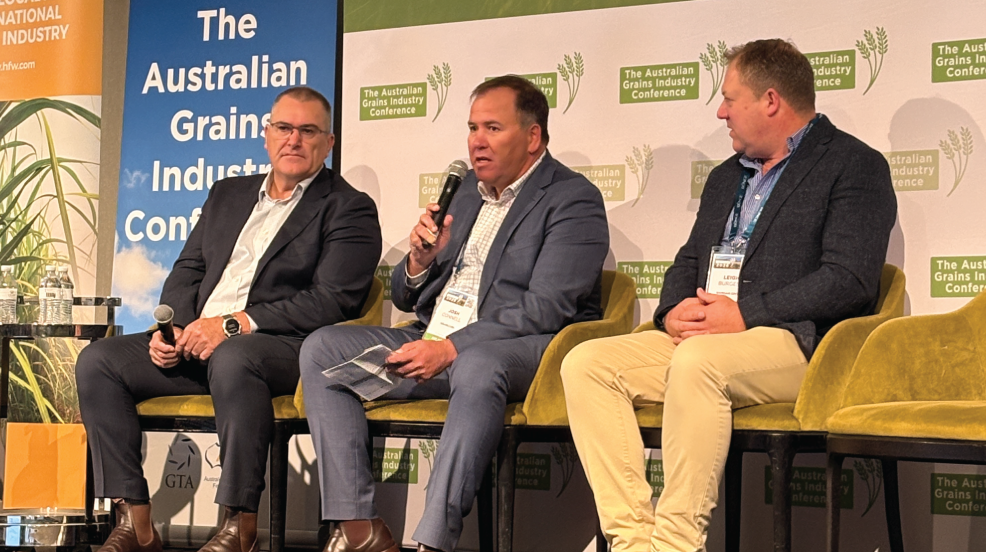
GrainCorp’s Head of Supply Chain Josh Connell joined an expert panel examining supply chain productivity, highlighting both the opportunities and challenges facing the industry as seasons fluctuate, regulatory settings evolve and customer expectations continue to advance.
Josh reinforced that maintaining an efficient supply chain requires ongoing investment and a regulatory environment that supports productivity.
“Australia has a world-class grain supply chain, but staying competitive requires removing unnecessary barriers that add cost without improving outcomes,” Josh said.
“For example, labour availability and cost will continue to challenge our sector, so we need to keep finding smarter ways to operate and making the most of our workforce if we’re going to remain globally competitive.”
Fumigation remains a critical industry issue
An important conversation happening throughout the conference was the proposed reduction to workplace exposure limits (WELs) for phosphine, which continues to be one of the most significant regulatory challenges facing the Australian grain industry.
Discussions reinforced the importance of achieving health and safety outcomes while ensuring regulatory changes remain practical and workable for bulk grain storage and export operations.
“The industry supports safe workplaces, but it’s equally important that regulatory changes are practical and evidence-based,” Josh said.
“We are working alongside Grain Trade Australia (GTA) and industry partners to advocate for an implementation pathway that maintains worker safety while avoiding unintended consequences for grain storage capacity, export competitiveness and Australia’s food supply chain.
“It’s critical that we ensure government and regulators recognise how essential phosphine is to maintaining grain quality and market access.”
Read Josh’s interview on phosphine here
Building Australia’s renewable fuels industry
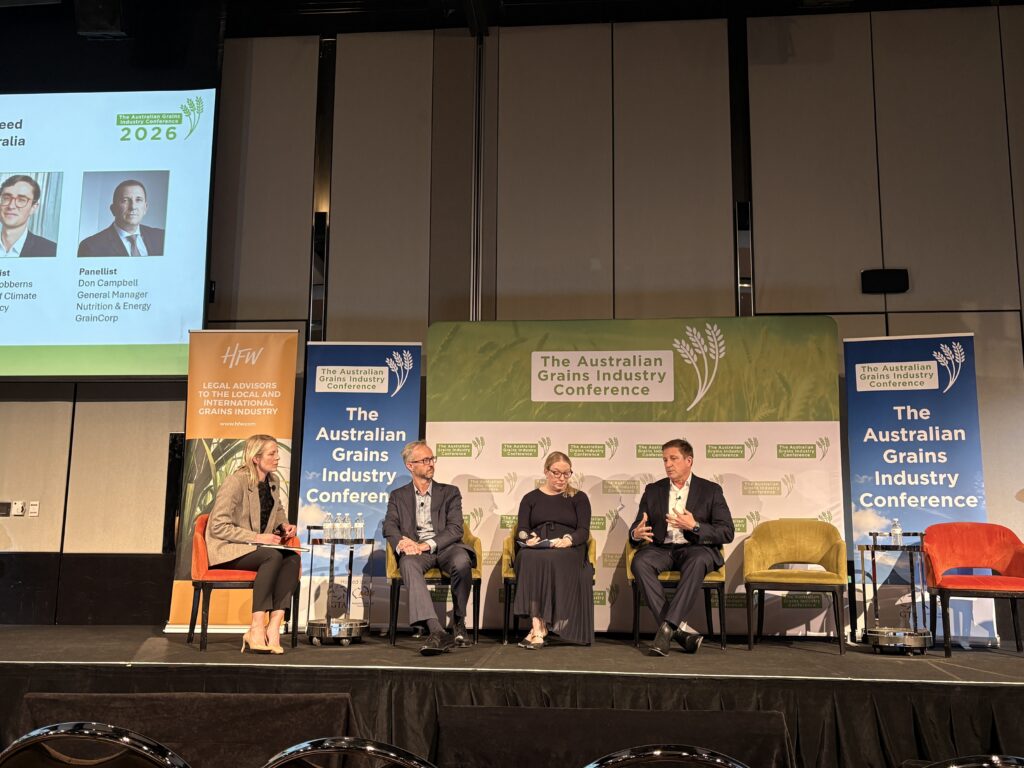
The conference also explored Australia’s growing renewable fuels opportunity, with GrainCorp General Manager, Nutrition and Energy Don Campbell joining a panel discussing the role grain and oilseed feedstocks can play in developing a domestic Sustainable Aviation Fuel (SAF) industry.
The discussion highlighted Australia’s strong agricultural production, existing processing capability and export expertise as key advantages in supporting a future low-carbon fuels industry.
Don spoke about the important role Australian-grown feedstocks, including canola, could play in helping establish a local SAF industry, while continuing to support food and feed markets.
“Australia already has the feedstocks, supply chain expertise and the ambition to become a significant contributor to sustainable aviation fuels,” Don said.
“Realising that potential requires all hands on deck across agriculture, industry and government, to put the policy and demand settings in place to encourage investment, and importantly, build this new market for growers.”
GrainCorp’s recently released SAF feedstocks white paper: From Paddock to Plane, covers the barriers and opportunities in developing a feedstock supply chain capable of supporting domestic SAF production.
Looking ahead
While the topics discussed at AGIC ranged from seasonal conditions and global markets through to trade, sustainability and regulation, one theme remained consistent: collaboration across the value chain will be essential to keeping Australia’s grain industry competitive.
For GrainCorp, the conference reinforced the importance of working alongside growers, customers, industry organisations and government to address shared challenges and identify opportunities that strengthen the industry’s future.